

Total
HK$0.00

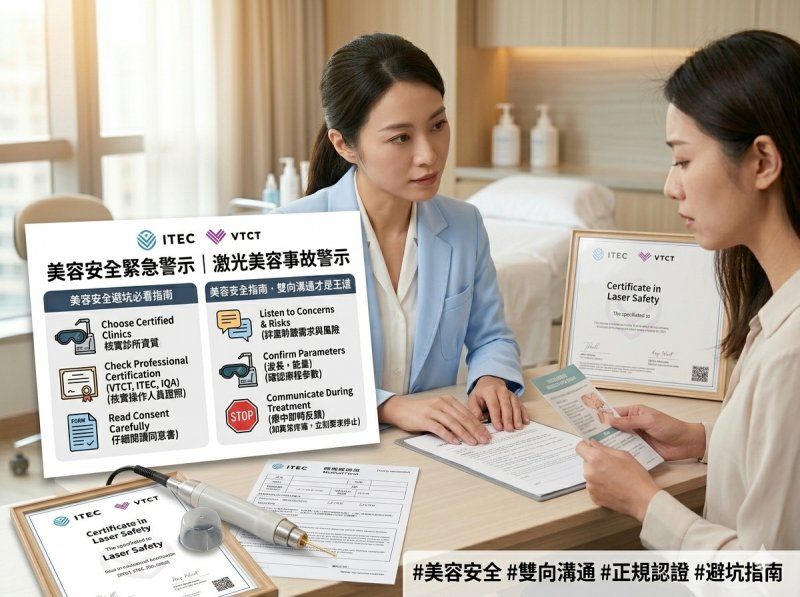
Beauty Safety Emergency Alert
Laser Beauty Treatment Warning: Picosecond Procedure Leaves Scars and Causes PTSD! Essential Safety Guide to Avoid Pitfalls
Beauty Safety Guide · Two-way Communication is Key
Laser Beauty Safety Picosecond Freckle Removal Pitfalls Hong Kong Beauty Accidents Beauty Operation Certification
Related Incident Reports / Expert Explanation Video (Reserved)
The above video/source is owned by "Scoop"
You can place Consumer Council reports, expert interviews, or safety operation demonstration videos here.
A distressing laser beauty incident was recently exposed: a person underwent a Pico picosecond freckle removal treatment at a beauty salon in Tsim Sha Tsui, hoping to enhance their appearance through skincare. However, due to the salon's unprofessional operation, they suffered facial redness, bleeding, and scarring, and furthermore developed post-traumatic stress disorder (PTSD) from the experience, requiring long-term psychiatric and psychological counseling. This incident once again sounds the alarm for beauty enthusiasts and practitioners in Hong Kong, Macau, Taiwan, and Mainland China...
I. Incident Reconstruction: Promised "No-Wound" Picosecond Treatment Becomes Physical and Psychological Trauma
In March 2023, this person, attracted by recommendations, chose a beauty salon in Tsim Sha Tsui that was offering a promotion and purchased a Pico picosecond freckle removal package. The salon explicitly promised to use a 1064nm wavelength picosecond device, emphasizing "completely no wounds, zero risk," and reassured the person, who was undergoing the treatment for the first time, that they would lower the energy and proceed slowly, putting them at ease. However, this "reassurance" lacked sufficient communication from the start—the operator did not inquire in detail about the person's skin condition or pain tolerance, nor did they thoroughly explain the risk clauses in the consent form, merely brushing it off with "don't worry," which became one of the hidden dangers of the incident. At the same time, as a consumer, the person did not proactively ask about the treatment details and potential risks, trusting the salon's promises too much and failing to express their concerns in time.
On the day of the treatment, when signing the consent form, the person noticed clauses stating "possible mild burning, redness, swelling, even edema, bleeding" and questioned them, but was again brushed off by the salon staff, who simply told them to sign without worry. Initially, the operator used the 1064nm wavelength without any obvious abnormalities. However, when the operator later switched the device parameters, the person suddenly felt severe pain and repeatedly asked to stop the treatment, but the operator forcibly held them down and continued until the so-called "treatment was completed." The lack of communication here was even more critical: the operator did not inform in advance about the reason for changing parameters or the possible change in pain sensation, nor did they respond to the person's immediate discomfort, ignoring that "communication is the first line of safety." Meanwhile, when the person initially felt discomfort, they did not immediately and clearly insist on stopping, failing to prevent the risk from escalating.
After the procedure, when the person removed the eye shield, they found not only extensive redness and swelling but also obvious bleeding wounds; wiping with tissue left blood stains. Their accompanying family members were also very worried. Afterwards, when the person questioned the salon about the operation, the operator initially vaguely admitted to changing the parameters but later directly denied it, only arranging for the person to visit a regular clinic rather than a specialized dermatology hospital. Even more frustratingly, the salon not only failed to address the incident responsibly but also demanded that the person sign a waiver of liability, refusing to refund the remaining package cost unless they complied. Only after the person strongly resisted did the salon reluctantly agree to cover part of the medical expenses. This perfunctory post-incident communication and blame-shifting undoubtedly exacerbated the person's physical and psychological trauma, for which the salon is undeniably responsible.
This incident caused irreparable harm to the person: facial scars remain unhealed, and due to the fear of being forcibly operated on, they developed PTSD. Subsequently, the person experienced severe insomnia, low mood, reluctance to go out, and even recurrent nightmares of the treatment scene, with suicidal thoughts. A doctor diagnosed that they need long-term psychiatric and psychological treatment. Their family members, who witnessed the injury process, have also been blaming themselves, and the entire family has been affected by this unprofessional beauty treatment. It is easy to imagine: if the operator had spent just 10 more minutes communicating the parameter details and risks thoroughly with the person, and if the person had proactively asked questions and firmly asserted their position in time, this tragedy might have been avoided.
II. Professional Analysis: Why Do Picosecond Treatments Go Wrong? 3 Key Points + 1 Core Communication Flaw
1. Arbitrary Change of Wavelength and Energy Parameters
The operator switched to the 532nm wavelength and increased the energy without consent, violating basic laser operation standards, directly causing epidermal damage.
2. Operator Lacked Professional Qualifications, Ignored Discomfort Signals
Without proper certification, the operator ignored the client's intense pain and repeated requests to stop, even forcibly continuing the procedure, showing a complete lack of professionalism.
3. Perfunctory Post-Incident Handling and Blame-Shifting
Denying operational errors, threatening to make the client sign a liability waiver, aggravating the client's psychological trauma and leading to PTSD.
Core Flaw: Insufficient Two-Way Communication
Lack of pre-treatment risk disclosure, real-time feedback during the procedure, and post-treatment emotional support; both the beautician and the consumer failed to achieve mutual understanding and expression, resulting in harm.
III. Beauty Safety Guide for Mainland China, Hong Kong, Macau, and Taiwan: Two-Way Communication + Rational Cooperation
Reminders for Beauty Practitioners
- Strictly verify qualifications: Obtain international certifications such as VTCT ITEC, IQA, etc., and prohibit unlicensed operation.
- Standardize instrument parameters: Any change in wavelength or energy must obtain the client's written consent.
- Proactive two-way communication: Inquire in detail about skin type, health conditions, pain tolerance, and patiently answer questions.
- Close monitoring during treatment: Respond immediately to discomfort, never force the procedure.
- Responsible follow-up: Acknowledge problems, proactively arrange medical care, and do not shirk responsibility.
Reminders for Consumers
- Choose institutions carefully: Verify business licenses and operator certificates; do not easily trust promotions or discounts.
- Proactively learn about the treatment: Ask about wavelength, energy, risks, and get promises in writing.
- Read the consent form carefully: Immediately question unclear terms; if necessary, walk away.
- Stand firm during treatment: Clearly demand to stop if you feel abnormal pain; do not endure it.
- Preserve evidence and维权 legally: Visit a hospital, keep receipts, and file complaints with 12315 or consumer councils.
Core message: Beauticians and clients must engage in "two-way communication and rational cooperation." Spending an extra ten minutes understanding each other can prevent 90% of risks.
IV. Must-Read for Practitioners: Formal Certification and Professional Training Are the Foundation of the Industry
This incident rings an alarm for the beauty industry: operators must hold authoritative certifications such as the VTCT Skills (ITEC) International Diploma in Laser and Intense Pulsed Light Treatments, IQA International Qualifications Assessment Alliance Laser and IPL Operator Certification, and undergo continuous training. Certification courses cover skin structure, laser principles, parameter setting, safety standards, and emergency response, eliminating unprofessional operations at the source. Beauty salons should also strictly review qualifications and prohibit unlicensed practitioners; this is their corporate social responsibility.
"Only professional certification can ensure client safety; only standardized operation can lead to long-term industry development."
V. Industry and Consumers: Mutual Progress – Rationality and Inclusiveness, Continuous Improvement
We must acknowledge that there are non-compliant institutions in the industry, but most practitioners operate with dedication. Consumers should maintain rational supervision without prejudice; beauty practitioners should learn from this incident, actively obtain certifications, and enhance communication awareness. Mutual understanding and tolerance between both parties are essential to building a safe and warm beauty environment.
VI. Conclusion: Beauty Enhancement – Safety First, Communication as the Bridge, Mutual Progress
Beauty practitioners, remember: qualifications, standardized operation, thorough communication, and strong sense of responsibility are the foundation of your profession and the most basic respect for consumers. Consumers, remember: rational choice, proactive communication, and self-protection are your responsibility to yourself. May everyone who loves beauty achieve it safely, and may the beauty industry progress through reflection, transmitting and safeguarding beauty.
#BeautySafety #TwoWayCommunication #Certification #PitfallGuide
Share this article

Comments (0)
No comments yet
Be the first to share your thoughts!
Leave a Comment